Homebuyers Academy

Common Questions, Clear Answers

Everything you need to know about buying your first home, answered in plain English.

Getting Started

This is by far the most common question we hear. The honest answer is that most people don't know where to start, and that's completely normal. Buying your first home involves finance, property, legal, government programs, builders, and a lot of moving parts that all need to work together at the right time. The biggest mistake you can make is trying to figure it all out on your own, in the wrong order, with advice from people who haven't done it recently.

The right starting point is to get a clear picture of where you stand financially, what support you're eligible for, and what's realistic in today's market. That's exactly what we do. We help you build a plan around your situation before you talk to a single bank, builder, or developer.

Think of buying your first home like an orchestra. You've got a broker, a land agent, a builder, a solicitor — individually they're all good at what they do. But without someone coordinating them, making sure they're all playing the same piece of music at the same time, things fall apart. That's what we do. We're the conductor.

We guide you through the entire journey from your very first conversation right through to the day you get your keys. We assess your financial position, identify every grant and scheme you're eligible for, connect you with the right specialists, and make sure nothing gets missed along the way. There's no cost to you for our service — our role is to make the process simple, easy, and actually enjoyable.

There's an old joke in real estate: when's the best time to buy a property? Twenty years ago. When's the second best time? Anytime you can.

Over the past fifty plus years, property prices in Australia have consistently trended upward. Block sizes have gotten smaller. Affordable areas have moved further out. In other words, the longer you wait, the more you'll pay for a smaller home further from where you want to be. That's not an opinion — there's only truth in numbers.

The real risk isn't buying at the wrong time. It's waiting and watching the market move away from you while you try to save a deposit that can never keep up with property growth.

Finance & Borrowing

Most people believe they need a 20% deposit to buy a home. They don't. There are multiple government backed programs designed specifically to help first home buyers get in with significantly less, in some cases as little as 2% to 5% of the purchase price.

The deposit you'll need depends on your personal circumstances, the property you're looking at, and which schemes you qualify for. We've helped people enter the market with savings from as low as $10,000. The key is understanding what's available to you and how to structure it properly — that's something we work through with every client individually.

No, and waiting to save 20% is one of the most expensive mistakes a first home buyer can make. Here's why: property prices in Australia have historically grown faster than most people can save. If a property grows by even 5% to 7% a year, that's tens of thousands of dollars in value, more than most people can put away in twelve months of disciplined saving.

Research shows that over 70% of first home buyers take more than five years to save a deposit. Five years in a rising market doesn't get you closer to your goal — it pushes it further away. The smarter approach is to understand what programs and support are available to bridge the gap, so you can get moving sooner rather than later.

Banks assess three main things — we call them the Three B's: the Buyer, the Block, and the Building.

The Buyer is you — your income, your expenses, your debts, and your credit history. The Block is the land you're purchasing. The Building is the home you intend to construct or buy. Each of these needs to meet the bank's criteria, and different banks have different policies on all three.

This is why it matters who your broker is. A specialist broker doesn't just submit your application and hope for the best — they understand which banks are the right fit for your specific situation before a single application is lodged.

Not necessarily, but they will affect how much you can borrow. Banks look at all of your financial commitments — credit cards, car loans, personal loans, buy now pay later accounts, and even HECS HELP. What surprises most people is that banks don't look at what you currently owe on a credit card — they assume the full credit limit is maxed out.

That means a credit card with a $10,000 limit that you barely use is doing more damage to your borrowing power than you realise. The good news is that these things can usually be restructured or resolved before you apply. It's about getting your finances in order first — which is exactly what our preparation process is designed to do.

Absolutely not. Getting a no from a bank is not the end of the road — in many cases it's just the beginning. In our experience, when a bank or broker says no, what they often really mean is "I can't be bothered." First home buyers represent a lot of work for comparatively little reward, and not every professional is willing to go the extra mile.

There are dozens of lenders in Australia, each with different policies. We've had clients who were told no by multiple banks only to find a lender who was the perfect fit for their situation. The question isn't whether you can buy — it's whether you've found the right person to help you.

This might surprise you, but we generally don't recommend it. A pre approval only assesses one part of the equation — you, the buyer. It doesn't consider the land or the building, which means it doesn't actually tell you what you can buy.

More importantly, every pre approval puts an enquiry on your credit file. Too many enquiries signal to lenders that you've been shopping around or getting knocked back, which can actually work against you. A specialist broker can assess your position and give you a realistic picture of your borrowing capacity without putting anything on your credit file. It is a smarter way to start.

Grants & Government Support

There are several federal and state government programs specifically designed to help first home buyers — from direct cash grants to deposit guarantees, stamp duty savings, and even schemes where the government contributes toward the purchase price of your home.

The tricky part is that eligibility depends on a combination of factors: your income, your savings, your citizenship status, where you're buying, whether you're building new or buying established, and your personal circumstances. Some of these programs can be stacked together, potentially saving you tens of thousands of dollars — but the rules are specific and they do change.

Rather than guessing what you might be eligible for, the smartest first step is to sit down with someone who works with these programs every day and get a clear answer based on your actual situation.

Lenders Mortgage Insurance — or LMI — is a fee the bank charges when you borrow more than 80% of a property's value. Here's the part that catches people off guard: LMI protects the bank, not you. And it can cost tens of thousands of dollars, added onto your loan.

The good news is that there are government backed programs that allow you to buy with a low deposit without paying LMI at all. In cases where we can't avoid it entirely, it's not ideal but it's not the end of the world either. Logically, you'll likely make the premium back within a year or two of your property going up in value. The cost of waiting will almost always be greater than the cost of LMI.

Yes. The First Home Super Saver Scheme allows you to make additional voluntary contributions into your super and then withdraw them — along with the earnings — to put toward your first home deposit. Because super is taxed at a lower rate than your regular income, your savings grow faster inside super than they would in a standard bank account.

There are annual limits on how much you can contribute and withdraw, and the process has specific steps and timeframes that need to be followed. If you're in a couple, both partners can access the scheme individually, which can significantly increase what you have available. It's a genuine advantage for first home buyers who plan ahead — but the detail matters, so it's worth getting the right guidance.

They're two completely different programs that are often confused. The First Home Owners Grant is a state government cash payment — a lump sum that goes directly toward your purchase. It's only available on brand new homes, and each state sets its own amount and eligibility rules.

The First Home Guarantee is a federal program that allows you to buy with as little as a 5% deposit without paying Lenders Mortgage Insurance. The government guarantees the gap between your deposit and the 20% threshold that banks normally require. It applies to both new and established homes and has its own eligibility criteria around property value.

The best part? In many cases, you can access both at the same time. Understanding which programs you qualify for and how they work together is one of the first things we do with every client.

New Builds & The Building Process

There are real financial advantages to building new that most people don't realise until they sit down and run the numbers.

First, the most significant government grants are only available on new homes. Second, when you buy a house and land package, you typically only pay stamp duty on the land component — not the full value of the finished home. That alone can save you thousands. Third, new builds come with structural and statutory warranties, so if something goes wrong in the early years you're covered. With an established home, every repair comes out of your pocket.

And then there's the part people love most — you get to choose your finishes, your layout, your colours. It's your home, built the way you want it. That said, whether new or established is right for you depends on your circumstances. It's not a one size fits all answer.

A standard new home typically takes around fifteen to twenty four weeks to build from the time construction begins. There are six stages: base, frame, enclosed, fixing, practical completion, and handover. Each one is a milestone you can see and track.

Before construction starts, there's a design and approvals phase that includes council and covenant approvals, which can take several weeks. The total timeline from signing your building contract to getting your keys varies depending on the builder, the complexity of the design, and external factors like weather.

The important thing is working with a builder and a team who keep you informed at every stage, so there are no surprises.

Full turnkey means that when the builder hands you the keys, the home is completely finished and ready to live in. Driveway done. Fencing up. Landscaping in. Letterbox installed. You literally turn the key and move in.

This matters more than most people think. A lot of builders advertise a house price that looks great on paper, but it doesn't include any of the finishing work. You move in and there's no driveway, no fencing, no turf — just dirt. Those extras can add tens of thousands of dollars to your final cost, and by then you're already committed.

We only work with builders who offer genuine full turnkey homes with a fixed price contract. That means the price you agree to is the price you pay — no variations, no surprises.

A fixed price building contract means the price agreed upon at signing cannot change once construction begins. It's your protection against cost blowouts.

During the COVID period, building material costs skyrocketed and supply chains fell apart. Builders who hadn't locked in fixed prices sent their clients contract variations of $50,000, $80,000, even $100,000 during the build. Many buyers lost their deposits. Many builders went bankrupt. It was devastating.

That experience reinforced what we've always believed: a genuine fixed price contract is non negotiable. When we say fixed price, we mean it — the figure in the contract is the figure you pay at handover. It's one of the most important protections you have as a first home buyer.

There are three things that matter above all else: a genuine full turnkey product with high quality inclusions as standard, a fixed price contract, and a track record of delivering on time.

A lot of display homes are designed to make you fall in love. But what you're looking at is the fully upgraded version — the Rolls Royce. The price they quote you is for something very different. By the time you add back everything that was actually in the display, you can be $50,000 to $100,000 over budget.

You want a builder whose standard inclusions are already at a level you'd be proud to live with. Stone benchtops, quality tiles, ducted or split system air conditioning, good flooring — all included from the start, not added as expensive upgrades. The right builder makes the difference between a stressful experience and an exciting one.

Price and location are the obvious ones, but there's a whole checklist of things that can significantly affect your build cost and your experience as a homeowner.

Registration status is critical — you want land that's already registered or within a few months of registration. Soil type, gradient, easements, flood overlays, bushfire attack level, acoustics, and developer covenants can all add cost or limit what you can build. A block that looks like a bargain on paper can become an expensive headache if these factors aren't checked upfront.

This is where having a specialist on your side makes a real difference. We know what to look for because we've seen what goes wrong when people don't check.

Your Situation

Yes, you can. It's more challenging than buying as a couple, but it's absolutely possible. We've helped plenty of single buyers get into their first home.

The key is understanding your borrowing power, identifying every bit of government support available to you, and finding the right property that fits within your capacity. In some cases, we've even helped single buyers team up with a trusted friend or family member to combine their incomes and buy together.

Being on a single income doesn't disqualify you. It just means your strategy needs to be more tailored — and that's exactly what we're here for.

In many cases, yes. A low credit score or a default doesn't automatically mean you're locked out of the property market. What it means is that you need someone who knows how to navigate the situation.

We've worked with clients who had credit scores below 300. In one case, we discovered a default that had been incorrectly placed on a client's file. Once it was removed, their score jumped by nearly 400 points and they were approved for a home loan. Defaults can sometimes be disputed, removed, or worked around with the right lender.

The first step is understanding exactly what's on your credit file and why it's there. From there, we build a plan to get you into the best possible position.

You can, but the process is a little different. Banks typically want to see at least two years of tax returns and a current Notice of Assessment from the ATO. They'll assess your taxable income — which, as most self employed people know, can be quite different from what actually hits your bank account.

The challenge is that many self employed borrowers legitimately minimise their taxable income for tax purposes, which then reduces what the bank thinks they can afford. It is a frustrating situation, but there are lenders who understand self employed income better than others.

This is where working with a broker who specialises in first home buyers and understands non standard employment income is essential. The right broker knows which lenders are more flexible and how to present your application in the strongest possible way.

Absolutely. There are two main ways family can help: a gifted deposit or a guarantor arrangement.

A gifted deposit is straightforward — a direct family member provides funds toward your purchase. Most lenders accept this, though they'll usually want to see that you've also demonstrated an ability to save, such as a consistent rental history with no missed payments.

A guarantor arrangement is more powerful. A family member uses equity in their own property to secure part of your loan. In some cases, this can mean you need little to no deposit of your own, and you avoid Lenders Mortgage Insurance entirely. The guarantor's obligation is limited to a portion of the loan and is released once your property has enough equity to stand on its own.

Both options have specific requirements and it's important to understand how they work before committing. We walk families through this regularly.

This is one of the most common things we hear. You know you earn a reasonable income, you're paying rent every month, but you have no clarity on whether you could actually buy — or what you could buy.

The truth is, affordability is more nuanced than most people expect. It's not just about your income. It's about your expenses, your debts, your savings structure, the area you're looking in, what grants you qualify for, and the type of property you're considering. All of these variables interact.

We start every client relationship with a thorough assessment of exactly where you stand. No guessing, no assumptions — just a clear picture of what's possible based on your real numbers. Most people are surprised by what they find out.

The Bigger Picture

This is one of the most important mindset shifts for first home buyers. Your first home doesn't need to be — and probably shouldn't be — your dream home. It's your step onto the property ladder.

The property market works like an escalator. It's heading up slowly but steadily. The hardest step is getting on. Once you're on it, the escalator does a lot of the work for you. Your property grows in value over time, building equity that gives you options — whether that's renovating, upgrading, or eventually purchasing your dream home while keeping your first as an investment.

The people who try to buy their dream home as their first home often end up waiting so long that they can't buy at all. The patient, strategic approach gets you further, faster.

When you add up what you'll pay in rent over ten years — factoring in annual increases — the total is staggering. And at the end of those ten years, you have nothing to show for it. No equity. No asset. No security.

When you own a home, your repayments are building equity in an asset that historically grows in value. Yes, there are costs — rates, insurance, maintenance. But the financial gap between renting and owning over a ten year period can be hundreds of thousands of dollars in favour of owning.

Rent money is debt money. You're paying off someone else's mortgage, funding someone else's retirement, with all the obligation of a loan and none of the upside. The sooner you can shift from paying someone else's mortgage to paying your own, the better off you'll be.

This is something we talk about a lot because it's one of the most misunderstood aspects of buying your first home.

When the market feels uncertain, it's natural to think: let's just wait a bit, save a bit more, see what happens. But in a market that consistently trends upward, waiting has real consequences. Property prices don't pause while you save. Every year you wait, you're likely paying more for a smaller home, further from where you want to be.

We've seen it firsthand with clients who waited twelve months to "save more" — only to come back and find they needed an extra $100,000 for the same type of property in the same area. The best case when you wait is that you pay more. The worst case is that you can no longer afford to buy at all.

No questions matched your search. Try a different keyword or browse by category above.

Still have questions?

Book a free, no obligation call with one of our specialists and get answers specific to your situation.

Book a Free Call

Free Guides & Checklists

Empowering your first home buying journey with essential tools and guides.

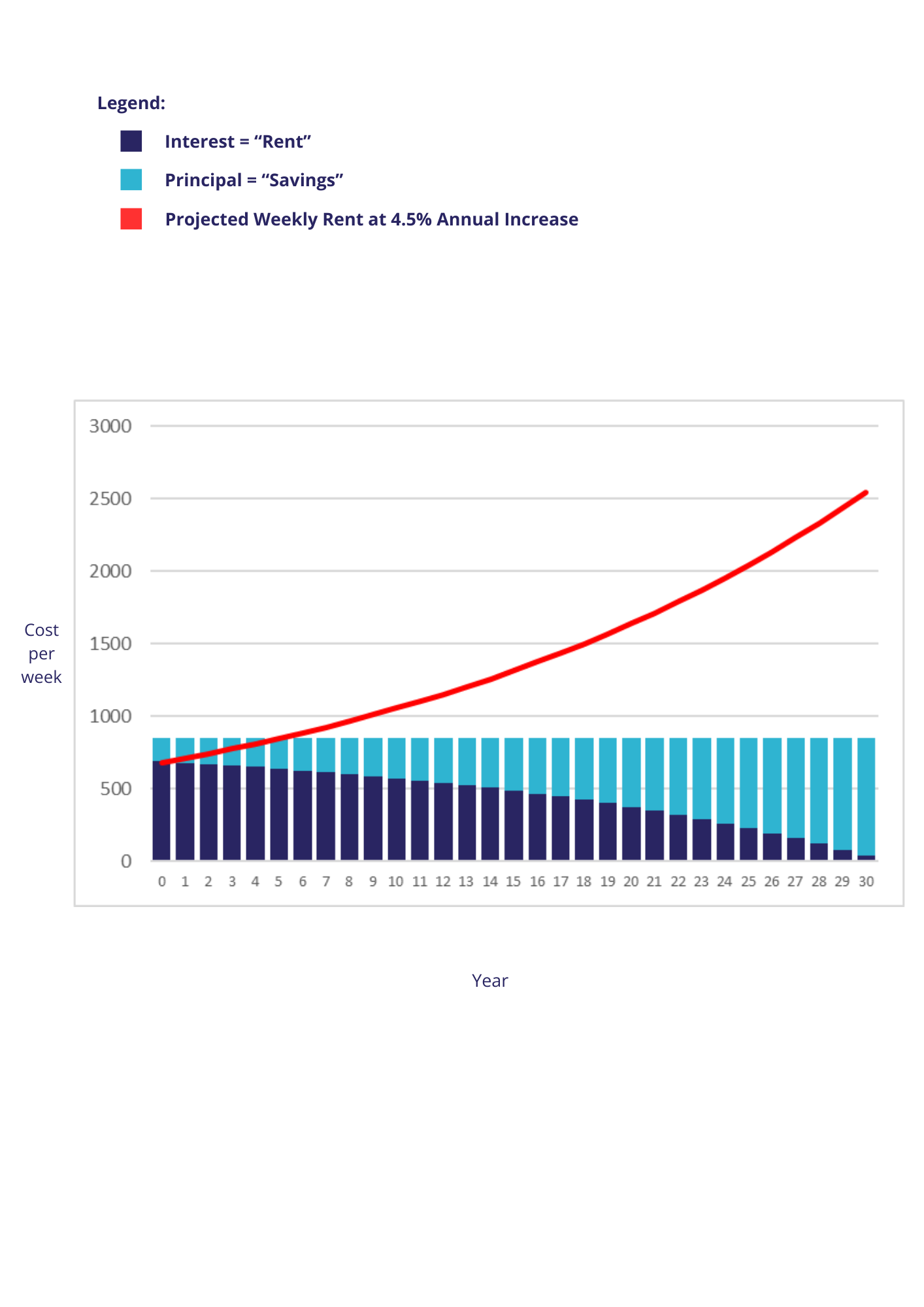
30 Year Owning vs Renting Comparison Graph

30 Year Owning vs Renting Comparison

A comprehensive graph showing the projected costs over a 30 year timeline of weekly mortgage repayments vs weekly rent. See the numbers for yourself.

Download
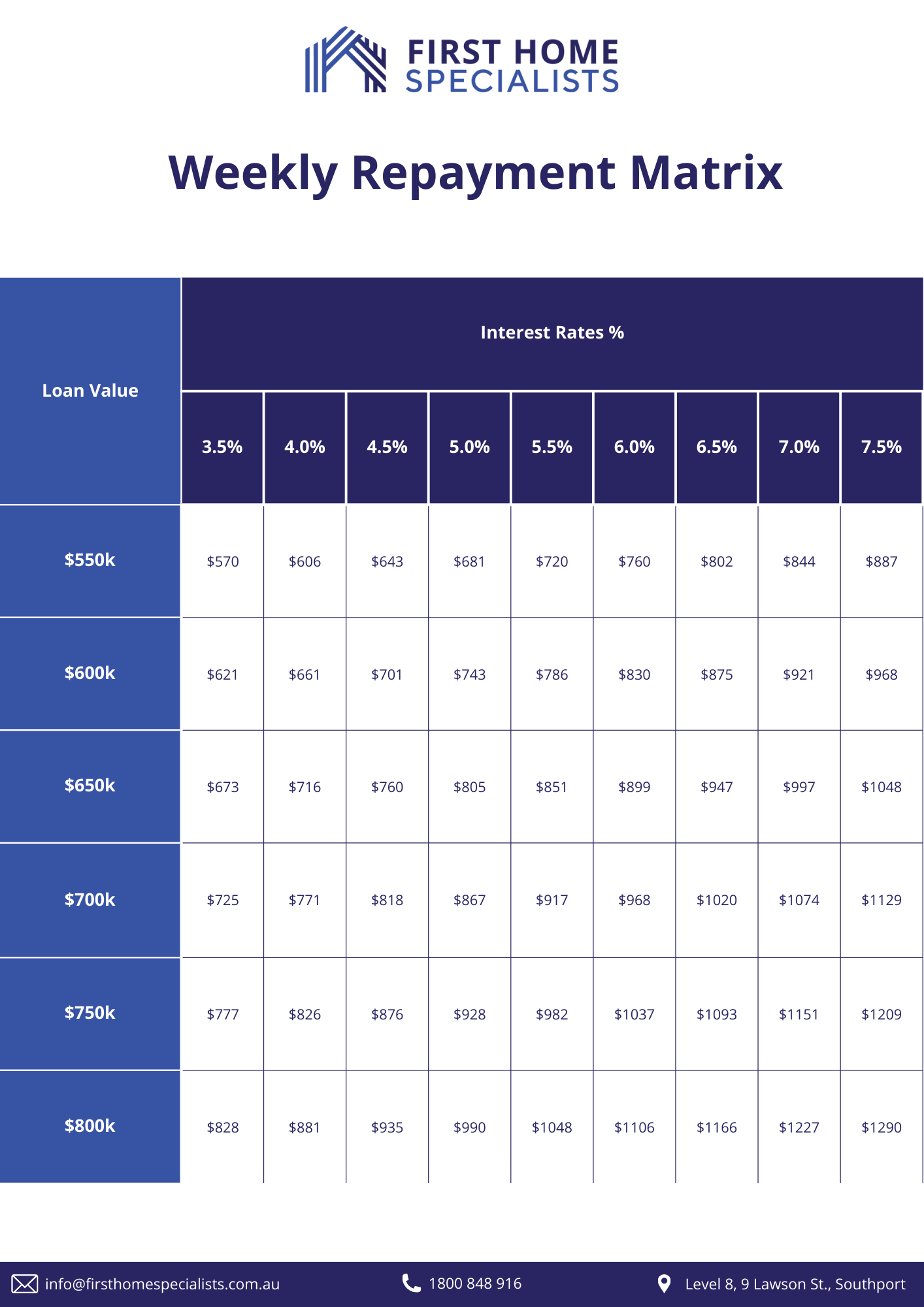
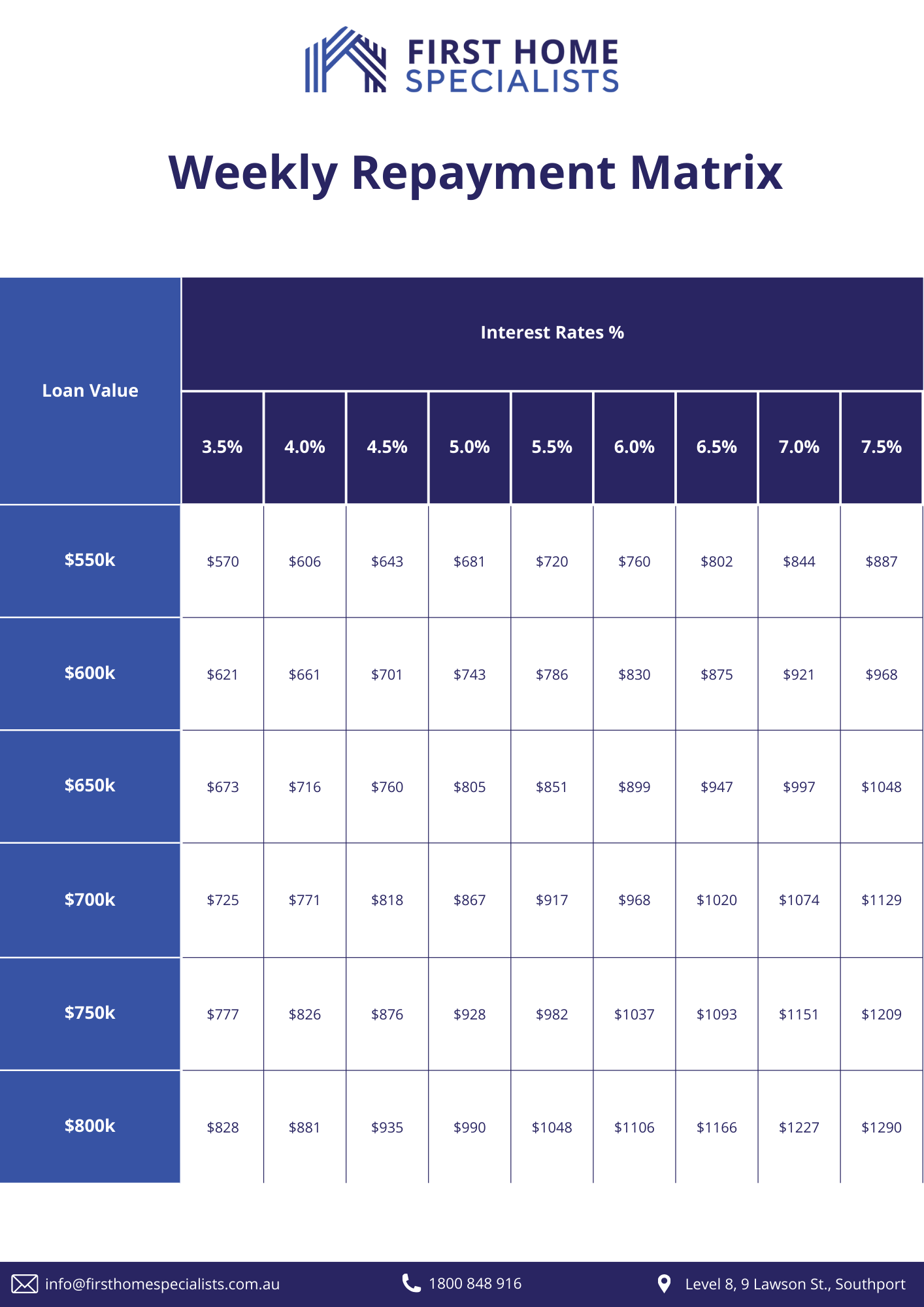
Weekly Repayment Matrix

Weekly Repayment Matrix

A comprehensive tool designed to guide first home buyers through their financial journey. Showcases a variety of loan amounts and interest rates tabulated to present weekly repayment figures.

Download
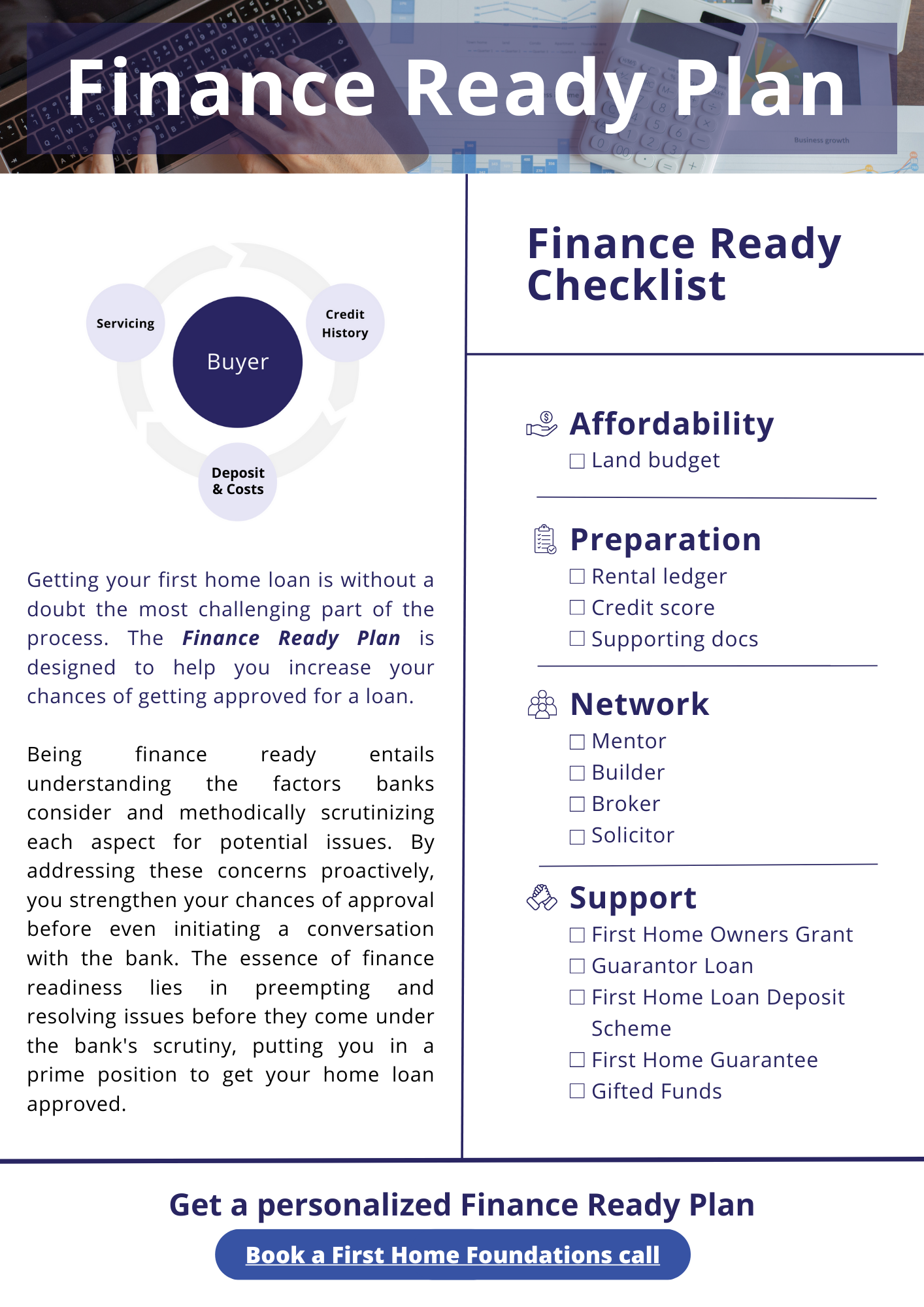
Finance Ready Plan Checklist

Finance Ready Plan

A straightforward checklist for first home buyers to help get their finances in order before talking with banks and lenders. Increase your chances of getting your home loan approved.

Download

Guides, Tips & Latest Advice

Expert insights written for first home buyers, in plain English.

30k First Home Owners Grant
December 4, 2023

30k First Home Owner Grant Boost: What You Need to Know

The Queensland government increased the First Home Owners Grant from $15,000 to $30,000. Here is what it means for you and what to watch out for.

Read More
Is it cheaper to own or rent
October 30, 2023

Is It Cheaper to Own or Rent?

The decision to buy your first home is one of the biggest financial choices you'll make. We break down the real numbers behind owning versus renting.

Read More
3 Reasons First Home Buyers Should Avoid Existing Homes
October 30, 2023

3 Reasons First Home Buyers Should Avoid Existing Homes

There are two reasons first home buyers consider buying existing homes. Here is why building new is almost always the smarter financial decision.

Read More
How a Flea Can Teach You to Leap into Home Ownership
August 1, 2023

How a Flea Can Teach You to Leap into Home Ownership

Fleas can jump 2 meters despite standing under 1.5mm high. There is a powerful lesson here for first home buyers who feel like the goal is too far out of reach.

Read More
Is This the Real Reason First Home Buyers Cant Buy
April 10, 2023

Is This the Real Reason First Home Buyers Can't Buy a Home?

Prices are going up, rents are going up, borrowing capacity is going down. But the real obstacle might not be what you think it is.

Read More
10 Things First Home Buyers Can Do
April 10, 2023

10 Things First Home Buyers Can Do to Increase Loan Approval Chances

Whether you have signed up for a property or you are still preparing, here are ten practical steps to get yourself in the best financial position possible.

Read More

Ready to Take the First Step?

Book a free, no obligation call with one of our specialists. We will assess your situation and show you exactly what is possible.

Common Questions, Clear Answers

It seems a simple question to answer but believe it or not, the answer is quite complicated as deposit amounts will vary based on property prices in location, eligible grants, and your individual circumstances.

We’ve helped first home buyers to enter the property market with savings from as low as $10,000. Getting a loan from any bank means that you will need a deposit; we help to determine how much. Typically, a bank will take into account 3 major areas when assessing you for approval:

  1. Your personal circumstances

  2. The block of land you are purchasing

  3. The house you intend to build on your block of land

We assist by first determining your eligibility to access multiple grants depending on your income band, genuine savings, citizenship/permanent resident status, marital and/or parental status, rental history and much more. With our support, we review and qualify your access to multiple grants including:

1. First Home Owners Grant
2. First Home Loan Deposit Scheme
3. Stamp Duty Relief and Exemptions
4. First Home Guarantee
5. First Home Owner Super Saver Scheme and much more.

It seems a simple question to answer but believe it or not, the answer is quite complicated as deposit amounts will vary based on property prices in location, eligible grants, and your individual circumstances.

We’ve helped first home buyers to enter the property market with savings from as low as $10,000.Getting a loan from any bank means that you will need a deposit; we help to determine how much. Typically, a bank will take into account 3 major areas when assessing you for approval:

1. Your personal circumstances
2. The block of land you are purchasing
3. The house you intend to build on your block of land
Free Guides & Checklists

Empowering Your First Home Buying Journey with Essential Tools and Guides

A comprehensive graph showing the projected costs over a 30-year timeline of weekly mortgage repayments vs weekly rent.

The Weekly Repayment Matrix is a comprehensive tool designed to guide First Home Buyers in navigating their financial journey towards home ownership. This matrix showcases a variety of loan amounts and interest rates, tabulated to present weekly repayment figures.

The Finance Ready Plan is a straightforward checklist for First Home Buyers to help them get their finances in order before talking with banks and lenders. This easy-to-use guide aims to help First Home Buyers increase their chances of getting their home loan approved.

Guides, Tips & Latest Advice

Are you ready to buy?

Are you ready to buy? If you’ve been told you’re not quite ready to buy a property, it will generally be for one of two reasons: Deposit Income If you’re falling short on deposit, you’ve got 3 options: Increase your

Read More »

Will rents keep increasing?

Why Brisbane is in a rental crisis, will rents keep increasing, and what you can do about it. Brisbane is currently in the grips of a rental crisis. There are 35% fewer properties on the market than average over the

Read More »

How does inflation impact First Home Buyers?

How Does Inflation Impact First Home Buyers? So what is inflation and more importantly, what does it mean to us as First Home Buyers? Inflation tracks the costs of an imaginary ‘basket of goods’ which is representative of the cost

Read More »

4 reasons to build new

4 reasons to build new! Should you buy a new house and land package, or an existing home? We share four of the benefits that come with buying a brand new home.   You choose to design, it’s built for

Read More »

Should I get a pre-approval?

Should I get a pre-approval? Firstly, what is a pre approval? I think a better term would be a conditional pre-approval. A conditional pre-approval is an indication from a lender that you’re eligible to apply for a home loan up

Read More »

Is it worth buying a property?

Is it worth buying a property? If we have data, lets’ look at the data. If all we have are opinions, then let’s go with mine. Would you prefer to pay off your mortgage or someone else’s? For most people,

Read More »

Will house prices drop in 2022?

Will house prices drop in 2022?   “Australian house prices set to drop further as interest rates surge…” “House price plunge spreads with biggest monthly decline in 39 years…” “Australian house prices drop for the first time in two years…”

Read More »
×
×

Cart